

How to Propagate Roses: A Step by Step Guide
If you're anything like me, every time you're out at a garden, you see a rose bush you don't have and think 'I wish I had that one in my garden....' I've done that countless times, and because I have an easy way to make that wish come true, my rose collection has grown rapidly. Now, by following the steps in this post, you can become an eclectic collector of roses just like me.
In this post, I'll be demonstrating propagation via cutting. This is a form of asexual propagation, which simply means growing a new plant from a piece of an existing plant rather than from seed. That piece might be a stem cutting, a rooted cane still attached to the mother plant, or a divided clump. The new plant is always a genetic match to the parent, so it keeps the same bloom form, color, fragrance, and growth habit.
I've found propagation via cuttings to be especially useful for roses. It can help you:
Preserve a beloved variety
Replace an aging shrub
Build a larger inventory of a specific cultivar
Share a favorite rose bush with friends or family
Obtain new varieties from friends or gardens (always ask permission before taking cuttings from public or private gardens)
Before propagating, check whether the rose is patented. In the United States, many newer rose varieties are protected by plant patents, and asexual propagation without permission is illegal during the patent term. I know, I know, it's just a plant. But the rose breeding world is INTENSE, and you do not want to get in a legal mess because you've propagated a new-fangled patented rose. It's just not worth it. The good news is that there are literally thousands of cultivars that aren't patented. Heirloom varieties, old garden roses, and ones with expired patents are all fair game. Rose conservationists from all over swap cuttings in efforts to preserve old heirloom cultivars that would otherwise die out. So, choose from those, rather than a currently patented rose.
Choose the right rose before you start
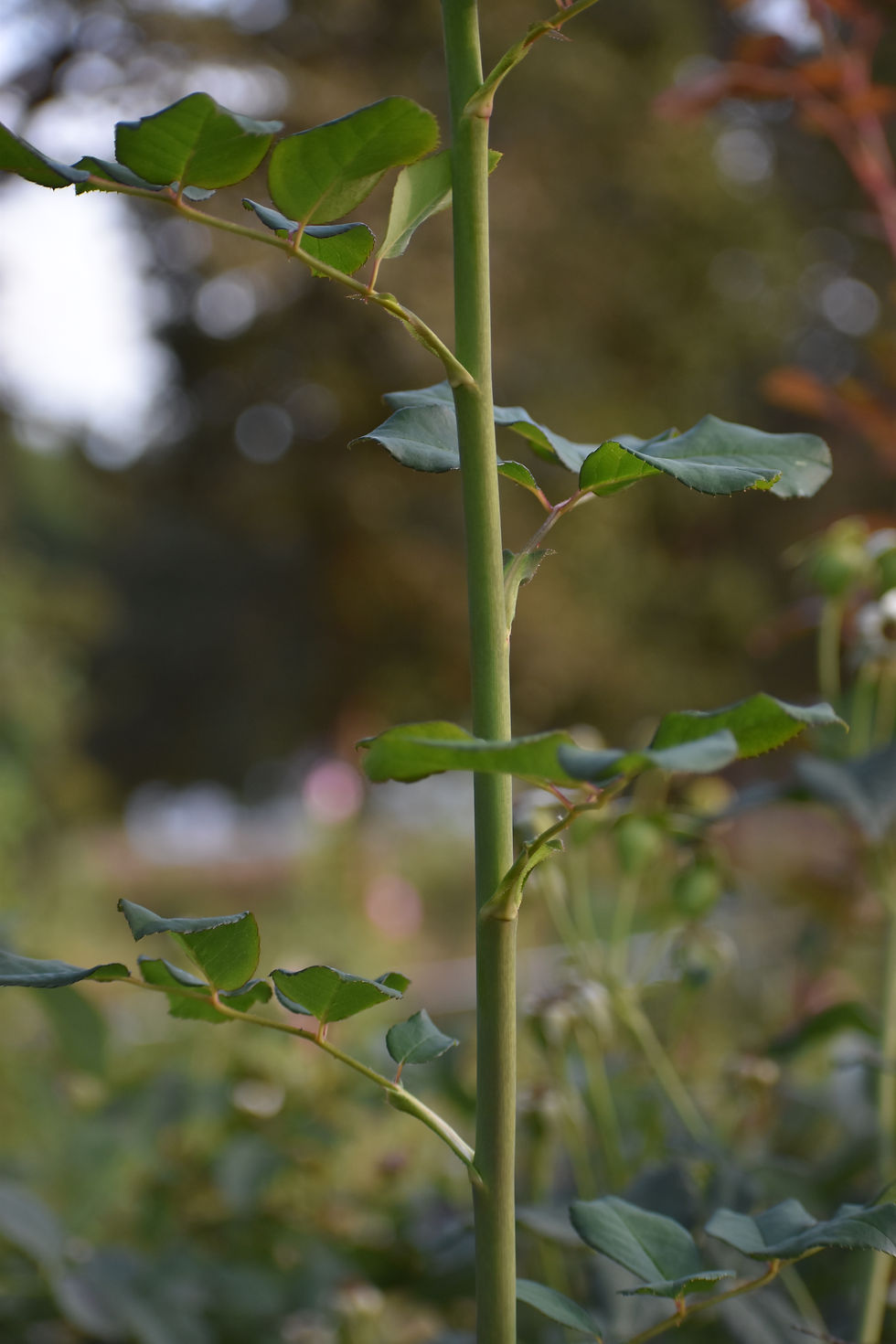
A healthy parent plant gives you a better chance at getting your cuttings to root. The cane pictured above is a healthy, vigourous cane that is perfect for cuttings.
Some things to look out for when collecting canes for cuttings:
Favor own-root roses
These grow on their own roots rather than being grafted to a rootstock. Roses on their own roots grow more true to type, have a longer lifespan, and are generally healthier. Roostock is also very invasive, and will continue to grow long after the grafted part has died. While it is totally okay to take cuttings from grafted roses, do make sure the canes you are taking are from the grafted part, and not rootstock. Avoid taking canes that grow from the base of the plant, if the rose is grafted.
Avoid diseased or less vigorous plants
Only take cuttings from the healthiest, most vigourous plants. Taking cuttings from diseased plants will result in cuttings that root weakly, or not at all.
Choose mature canes
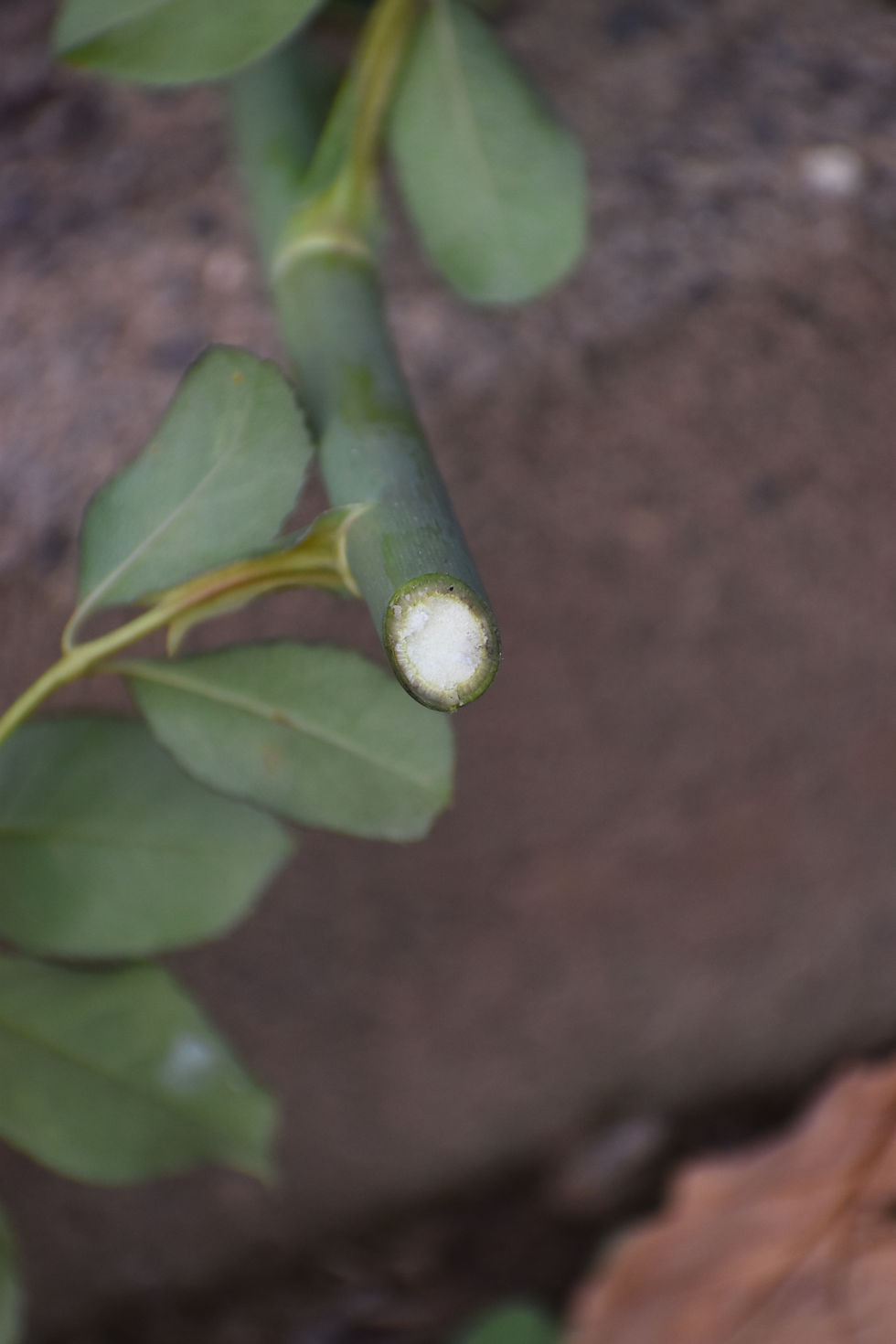
Make sure the canes you choose for cuttings are mature enough to root. The inside of the stem should be white and pithy, not green and fleshy. Cuttings taken from an immature cane will not root, and will simply rot, or wilt immediately.
Choose your cultivar wisely
Some rose cultivars root more easily than others. Do your research on the rose cultivar you're propagating before taking cuttings. This doesn't mean you can never try to propagate roses that are difficult, but it's important to set expectations when propagating. With difficult roses, take twice or three times as many cuttings as plants you want, as some will not root. Old heirloom varities are almost always a safe bet for easy propagating.
Gather what you need
Use clean supplies to reduce the chance of rot or disease.
You will need:
Sharp pruners
Small pots or a tray with drainage holes
Rooting mix (I mix my own from perlite, peat, and coconut coir)
Clear cover, humidity dome, or plastic bag
Plant labels
Rooting hormone (can be purchased at any garden center)
Taking the cutting
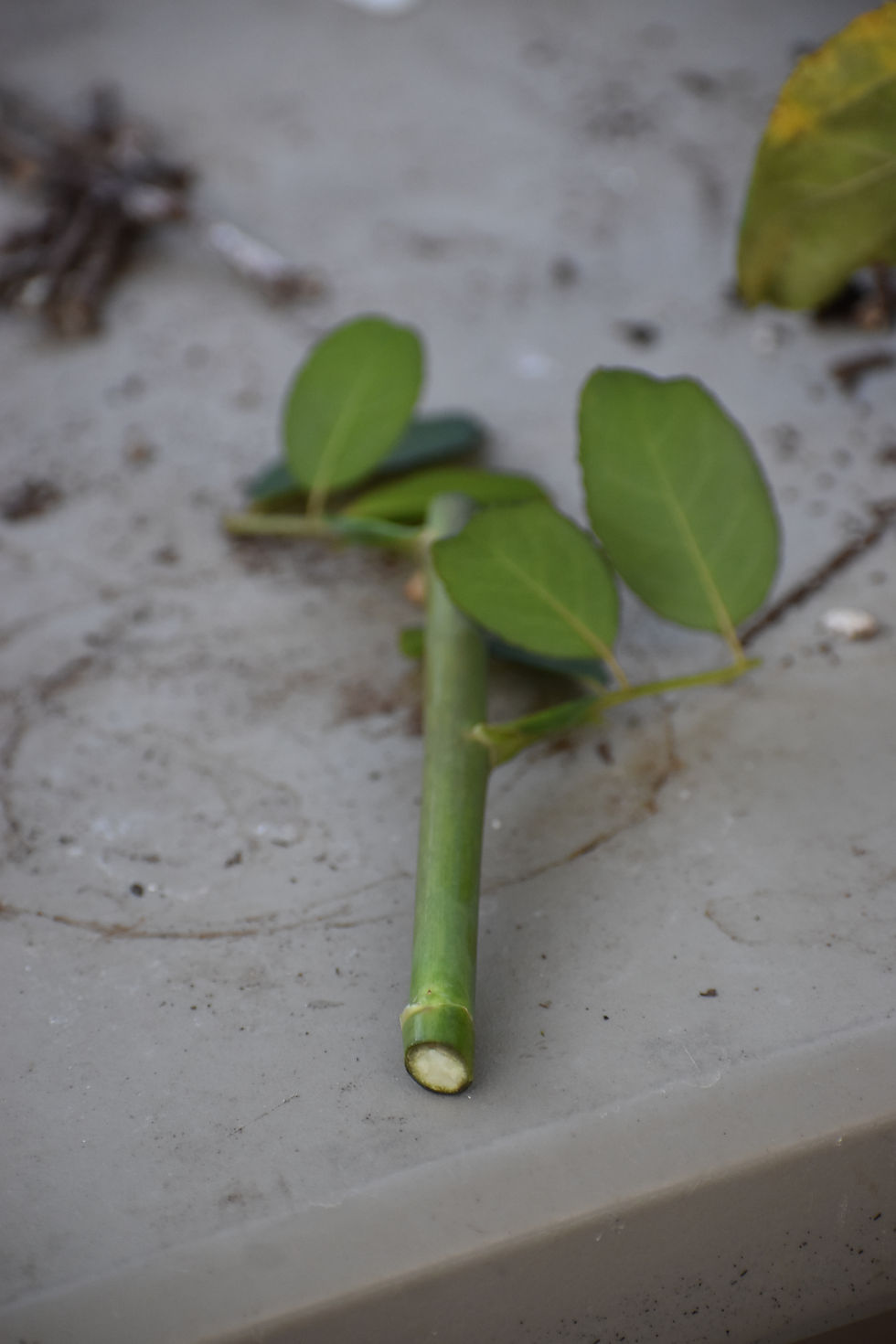
Choose a healthy stem that recently flowered or is actively growing. Cut a piece about 4 to 6 inches long. Make the lower cut just below a leaf node, as nodes contain the tissue that is needed to produce roots.
Strip the leaves off the node where you just cut. Then, count two more nodes up the cane, and then cut off the top of the cane right above the third node. Now your cutting should be one exposed node on the base of the cutting, and two nodes with the leaves still attached. If the remaining leaves are large, trim them in half to reduce transporation(water loss).
The lower node will go below the surface of the rooting mix, and the two with leaves will stay above.
Prepare and plant the cutting
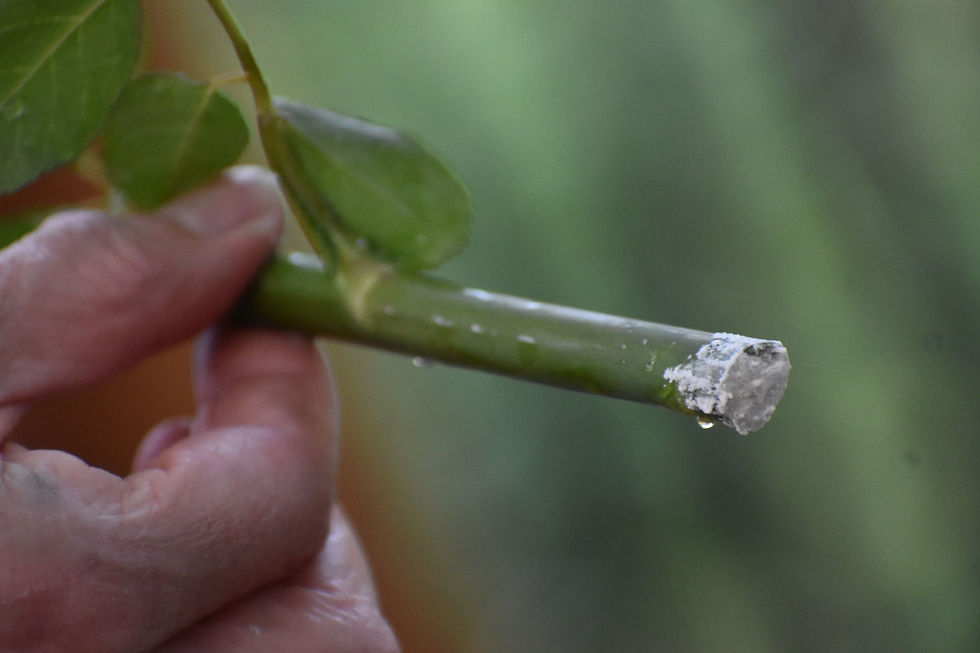
Dip the lower end in rooting hormone, and tap off any excess powder. Too much can clump and hold moisture against the stem.
Make a hole in the rooting mix with a pencil or your finger. Insert the cutting until the mix is above the lowest node. Firmly press the mix around the stem so it does not wobble.
Water well, then let excess water drain. The mix should feel evenly moist, but not soggy.
Create humidity
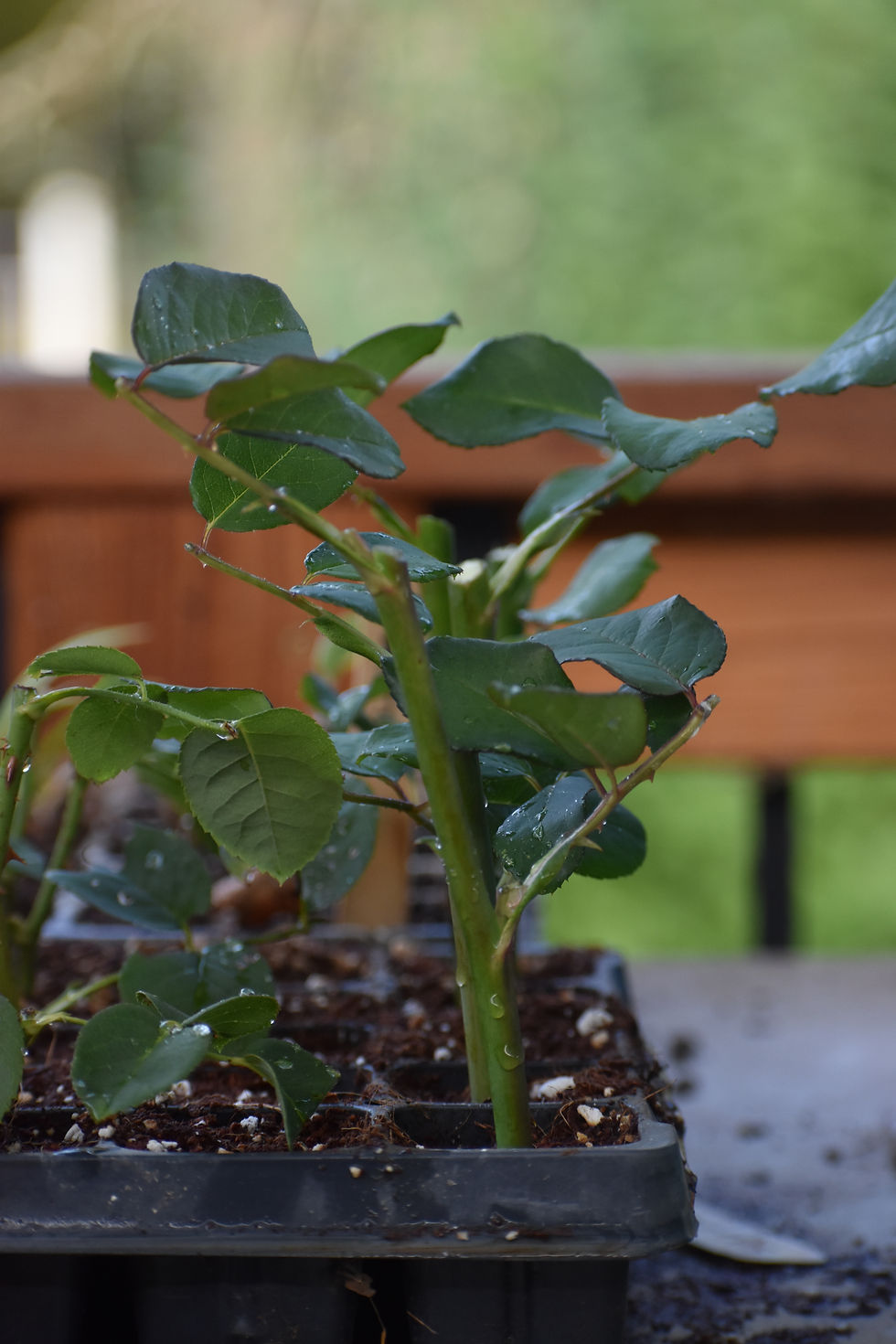
Rose cuttings do not have roots yet, so they lose water faster than they can replace it. A clear cover helps keep humidity around the leaves, which will allow the cutting to focus on making roots.
Place a clear cover or a plastic bag over the pot. Open it often for fresh air. If condensation drips constantly or the cutting looks slimy, give it more ventilation.
Put the cuttings in bright, indirect light. Avoid hot midday sun, which can cook them under plastic.
Watch for roots
Rooting can take several weeks, so resist the urge to tug on the cuttings too early. New leaf growth can be a good sign, but it does not always prove roots are forming. I have had cuttings sprout new growth right away, only to die off a week later.
A gentle test works best. After several weeks, lightly nudge the cutting. If it resists, roots may be forming. Once roots are visible through drainage holes or the cutting holds firm, begin opening the cover for longer periods each day.
That gradual adjustment helps the young rose handle normal air.
Once a cutting roots, do not rush it into full garden conditions. Young roots are tender. Move the plant gradually into brighter light over a week or two. Pot it into a slightly larger container with good-quality potting mix once it has a healthy root system.
Feed lightly only after the plant is growing well. Strong fertilizer too early can burn new roots. A gentle liquid fertilizer at reduced strength is plenty once growth begins.
Before planting outside, harden the rose off. Set it outdoors in a sheltered spot for a few hours a day, then increase the time and light exposure. Plant it in the garden when it can handle sun, wind, and normal temperature swings.
Troubleshoot common propagation problems
Even skilled gardeners lose some cuttings. I used to work at a rose farm, and there would be some varieties where we would regularly loose half of what we propagated. It's important to plan for some cuttings not making it, so always do more than what you want or need.
If cuttings turn black from the bottom, the mix may be too wet, the tools may need better cleaning, or the stem may have been too soft. Try a lighter mix, and make sure your canes are not too immature.
If leaves wilt quickly, the cutting may be losing moisture too fast. Reduce leaf area, increase humidity, and keep it out of direct sun.
If the cutting stays green but does not root, give it more time. Some rose varieties root slowly. You can also try taking cuttings at a different stage of growth. I have foudn some cultivars root better on canes that have matured into the autumn.
If a new plant grows weakly after potting, check light and watering. Young roses like consistent care, but they do not like sitting in wet soil.
Keep good records and compare results
Propagation teaches you more when you track what you did. A simple label can save a lot of confusion, especially when several cuttings look alike. As a gardener who is always SURE I'll rmember exactly what I propagated when and where, I almost always end up confused, with dozens of unlabeled baby rose bushes. So, please, please, always label your plants.
Record:
Rose name or description
Date taken
Type of stem
Rooting mix
Location and light conditions
Date roots appeared
Notes on success or failure
Over time, patterns appear. You might find that one rose roots best from semi-hardwood cuttings, while another does better with newer growth. Your climate, soil, and season all play a role.
This is also where sharing helps. Ask neighbors, local rose societies, garden clubs, or online rose groups what has worked for them. Share your own results too, including the attempts that failed. Those details often help another gardener avoid the same problem.
And most importantly, sit back and enjoy the process! Propagation takes time and patience, but growing roses is rewarding work when you can finally take a stroll around your garden and enjoy the sights and scents of your labor.



Comments